Date: Aug. 28, 2026

EN
EN
Table of Contents
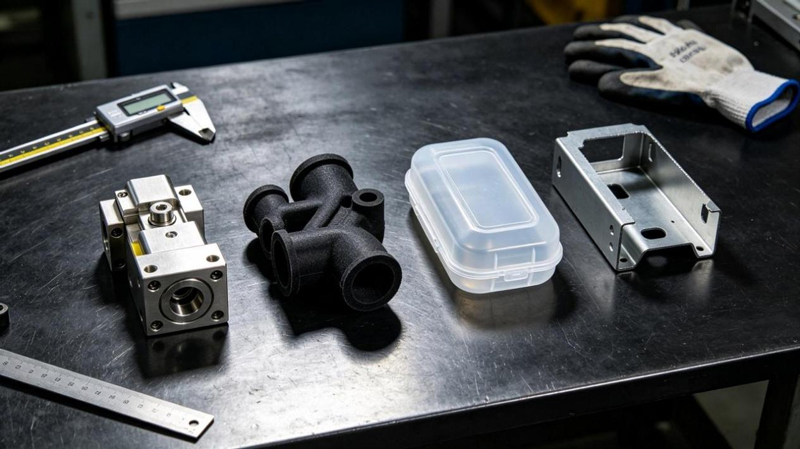
When developing a new product, selecting the correct manufacturing solution directly affects prototype quality, lead time, and overall project cost. Many R&D engineers face confusion when choosing among CNC machining, 3D printing, vacuum casting and sheet-metal fabrication for prototype validation. Each technology carries unique strengths and limitations for different application scenarios.
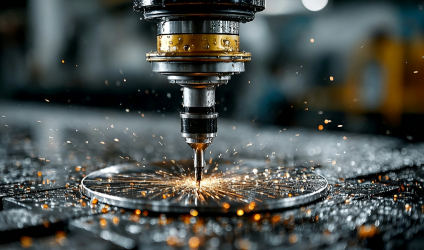
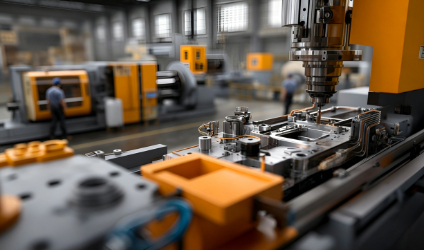
CNC machining remains one of the most reliable solutions for functional prototypes. It supports a wide range of metals and engineering plastics, delivering high dimensional accuracy and real-world material properties. For parts requiring actual strength, hardness or heat-resistance performance, CNC-machined samples behave closest to mass-production parts. However, complex undercut structures will increase fixture cost and processing cycles.
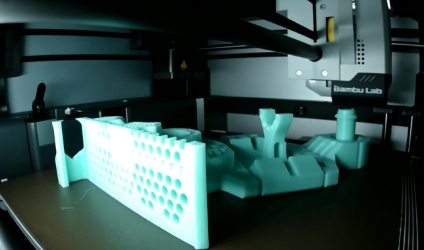
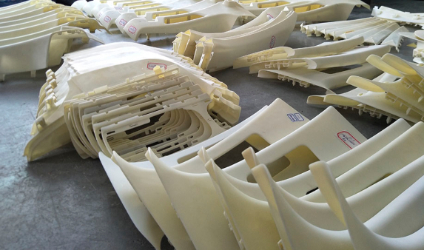
3D printing, including SLA, SLS and MJF, excels at highly complex geometries with internal cavities or intricate lattices. No custom tooling is needed, so designers can receive samples within 1-3 working days. It fits early-stage appearance verification and concept validation. Yet some printed materials cannot fully replicate mechanical performance of injection-molded end-use parts.
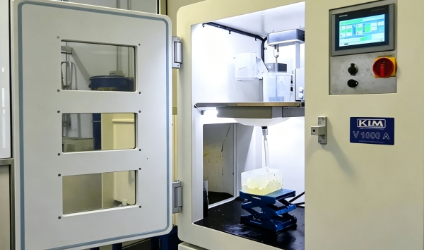
Vacuum casting is ideal for low-volume prototype batches from 5 to 50 pieces. Based on silicone molds, it can simulate various plastic textures and colors with low upfront investment. It serves well for market testing, customer evaluation and pre-production trials. Its limitation lies in mold life, which is not suitable for large-scale mass manufacturing.
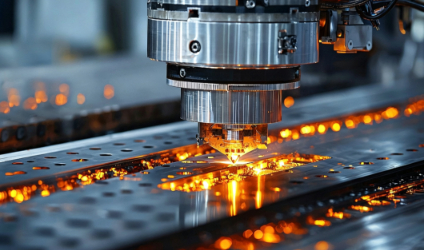
Sheet-metal fabrication targets enclosure, frame and housing prototypes. Laser cutting, bending and welding quickly build metal shell parts for automation equipment, energy-storage cabinets and instrument housings. Designers need to pay attention to bending radius, hole-edge distance and assembly clearance during drawing design.
Before confirming your process, you need to clarify three core points: your core goal (appearance check / functional test / small-batch trial), target material, and expected quantity. If you are unsure which route fits your drawing, DFM review service will help you avoid design-related manufacturing risks.
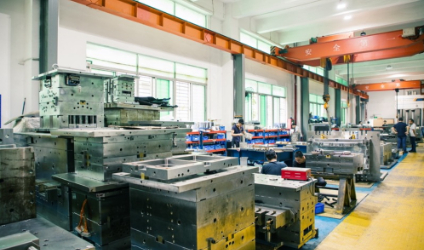
At Jingxin Precision, our engineering team provides free DFM feedback for every project. We combine CNC, 3D printing, vacuum casting and sheet-metal capabilities to deliver one-stop rapid manufacturing solutions from prototype to low-volume production.
If you have any enquiries, please feel free to reach out to us.
Copyright @ Shenzhen Jingxin Precision Technology Co., Ltd. .All Rights Reserved |
Sitemap
|
Powered by:
